


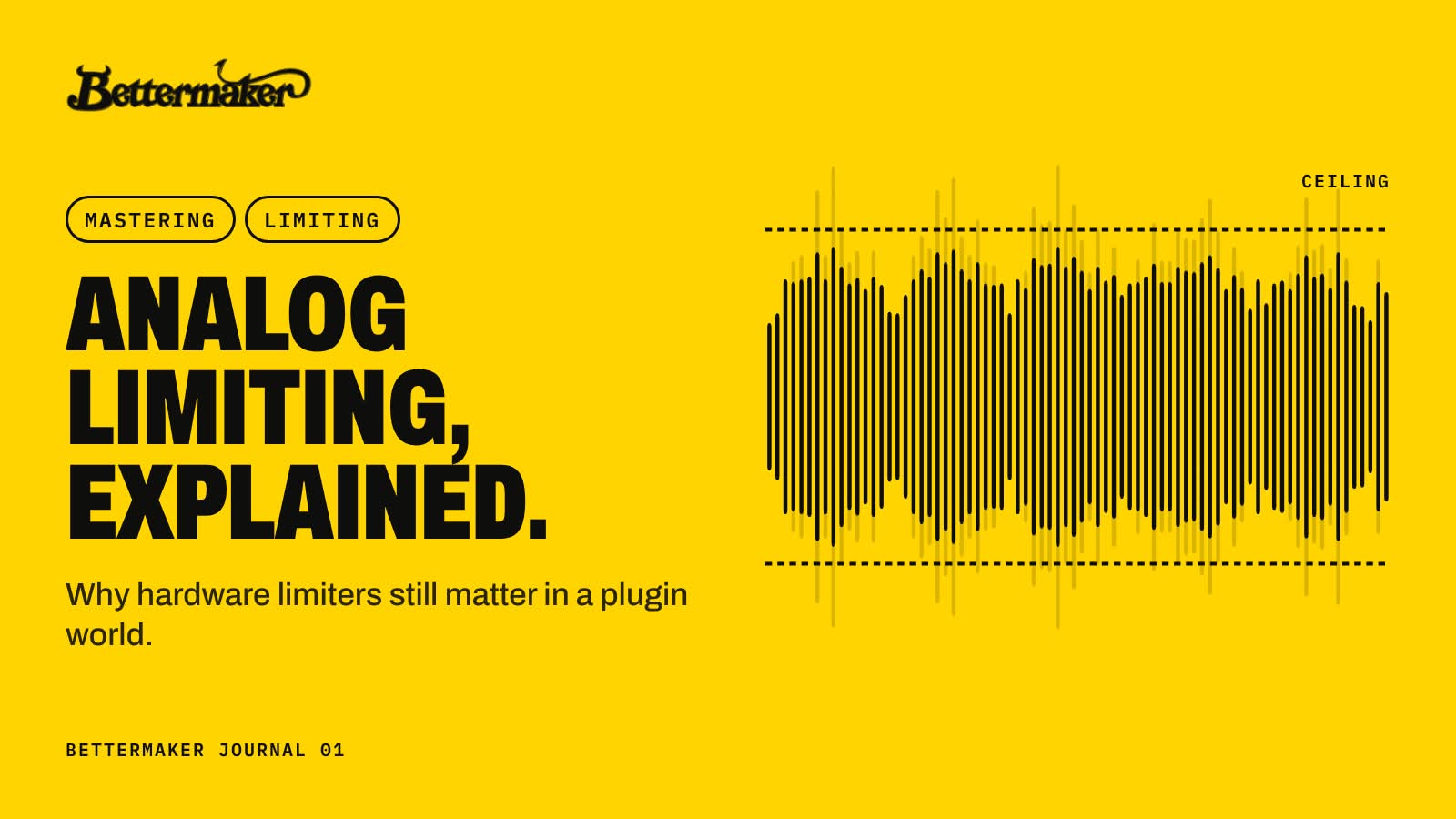
Short answer: analog limiting controls the peaks of a master in real time, in the analog domain. Instead of slicing transients flat, it rounds them and adds harmonic density, so a track can get louder while keeping its punch. In a professional mastering chain the analog limiter does the heavy lifting first. A clipper, or a deliberately driven A/D converter, then shaves off the last fraction of a decibel. A final digital limiter is the cherry on top: a useful safety net for true peak, but not a requirement.
Your cart is empty